
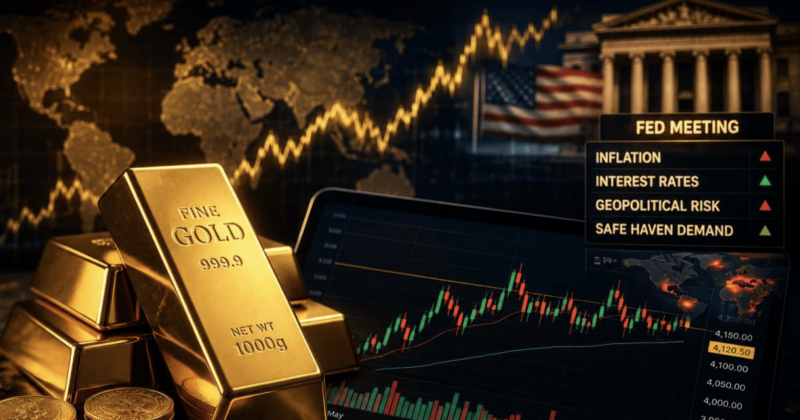
Gold is having one of those stretches where nobody in the market can look away. Prices are still trading close to the $4,100 to $4,200 range after retreating from January’s record highs, and the tug of war between the Fed, inflation data, and Middle East headlines keeps flipping sentiment week to week. For anyone with a position open, or thinking about opening one, this is exactly the kind of month where preparation matters more than luck.
That’s the real reason gold stays one of the most actively traded assets on the planet. It reacts to almost everything, interest rates, currency moves, war, central bank buying, which makes it endlessly tradable but also unpredictable if you walk in without a plan.
What’s Actually Moving Gold Prices This Month
Three forces are doing most of the heavy lifting right now. The Fed’s rate path is the biggest one. Markets are currently pricing a real chance the Fed holds steady or even leans hawkish if inflation stays sticky, and that alone has been enough to cap gold’s rallies this year.
Inflation itself hasn’t cooperated either. Core inflation readings have come in hotter than the Fed’s target, and that keeps real yields elevated, which is historically bad news for a non-yielding asset like gold.
Then there’s the geopolitical layer. Tensions tied to Iran and the wider Middle East have pushed gold into safe haven mode more than once this year, and that pattern isn’t new. Gold’s reputation as a safe haven for risk-averse investors during wars, inflation spikes, and currency instability has repeated itself through several conflicts over the past few years, and this month is no exception. Watch central bank buying data too. Reported purchases have slowed compared to last year, but a lot of buying goes unreported, so don’t assume the trend has actually reversed just because the headline number dipped.
Get Your Prep Right Before You Place a Trade
Before you even think about entries, spend time on the chart. Identify the dominant trend on the daily timeframe first, then zoom into your trading timeframe. Gold has been choppier than usual lately, so trend confirmation matters more than it did a year ago.
Mark out your support and resistance zones ahead of time, not while you’re already in a trade. Psychological levels like $4,000 and $4,200 tend to attract heavy order flow, and reacting to them in real time is a lot harder than planning around them beforehand.
An economic calendar is non-negotiable this month. CPI releases, Fed statements, and jobs data can move gold by dozens of dollars within minutes. If you’re trading through one of those releases without knowing it’s coming, that’s not trading, that’s gambling with extra steps.
Your broker or prop firm matters here too. Wide spreads eat into gold trades fast given how much the price moves intraday, so it’s worth comparing options that let you trade gold with low spreads before committing capital to any single platform.
Practical Gold Trading Tips for This Month
Risk management first, always. Cap your risk per trade at 1% to 2% of your account, no exceptions, even if a setup looks obvious. Gold’s current volatility means stop-outs happen faster than people expect.
Position sizing should scale with volatility, not stay fixed. When the average daily range widens like it has this year, trading the same lot size you’d use in a quiet market is asking for a bigger loss than you planned for.
On entries, wait for confirmation rather than chasing. A break above resistance followed by a retest tends to offer better risk to reward than jumping in on the first breakout candle. Set your stop-loss the moment you enter, not after. Placing it below a recent swing low or above a swing high, depending on direction, keeps emotion out of the exit decision.
Some traders lean on automation to stay disciplined during fast-moving sessions. If manually watching every tick isn’t realistic for your schedule, it’s worth looking into tools that let you use an expert advisor to execute your rules consistently, especially around high-impact news windows.
Mistakes Traders Keep Making in Volatile Gold Markets
Overleveraging is the classic one. Gold’s swings this year have punished anyone using outsized position sizes meant for calmer markets.
Ignoring the news calendar is a close second. Traders get caught holding positions straight through a Fed statement or NFP release, then wonder why their stop got hit on a spike that had nothing to do with their original technical setup.
Moving stop-losses further away “to give the trade room” is another quiet account killer. It feels reasonable in the moment. It almost never works out that way.
Revenge trading after a loss deserves a mention too. Volatile months like this one tempt traders into doubling down to win back losses immediately, which usually just compounds the damage.
Day Trading vs Swing Trading Gold: Which Fits You
Day trading gold suits people who can watch the screen during active sessions and want trades closed out by end of day. It demands tighter stops, quick decision-making, and comfort with fast reversals, all of which are common in the current environment.
Swing trading fits better if you can’t monitor charts all day. Positions are held for days rather than hours, riding broader trend moves shaped by Fed expectations and geopolitical developments rather than intraday noise. Stops are wider, but so is the potential reward per trade.
Neither approach is objectively better. It comes down to your schedule, risk tolerance, and whether you find fast intraday moves exciting or exhausting.
Your Monthly Gold Trading Checklist
Before you trade gold this month, confirm the trend, mark your key levels, check the economic calendar, size your position around current volatility, and set your stop-loss before entry, not after. Keep risk per trade small, avoid trading straight through major news releases, and pick a strategy, day trading or swing trading, that actually matches how much time you have to watch the market. Discipline beats prediction here. Gold doesn’t reward guessing right nearly as much as it rewards not blowing up your account on the days you guessed wrong.