Have you noticed that the buds on your plant are growing in a strange way, with elongated towers sticking out from the centre of the calyx like tiny spirals or tails? If so, you’re very likely looking at the famous foxtailing. Don’t worry — you’re neither the first nor the last grower to come across this phenomenon, and understanding it well can make the difference between a spectacular harvest and an avoidable disappointment. In this article, we explain everything: what it is, why it happens, how to identify it and, above all, what to do about it.
What exactly is foxtailing?
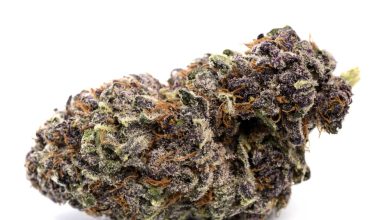
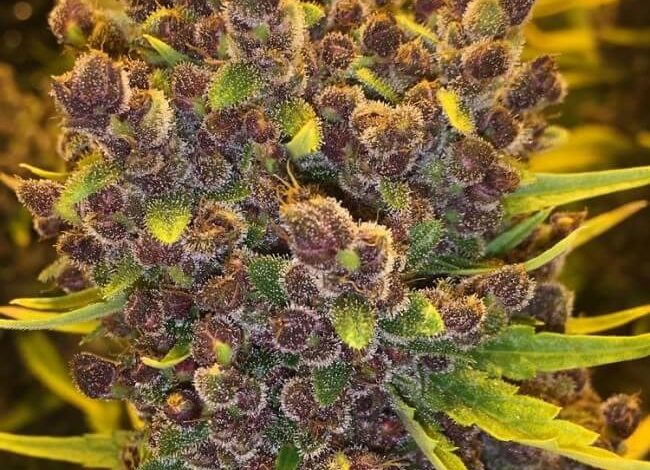
The term foxtailing (from fox tail) refers to a distinctive growth pattern in which cannabis buds develop tower- or spike-shaped extensions that emerge from already-formed calyxes, instead of following the usual compact thickening. The visual result is striking: the bud appears to branch upward with new pointed formations that give it that “foxtail” look — or even the appearance of a tiny miniature pineapple.
The important thing here is to understand that foxtailing is not always a bad sign. It all depends on the origin of the phenomenon. There are two clearly different types, and confusing them can lead you to make the wrong decisions in your grow. Let’s break them down!
Genetic foxtailing: when nature calls the shots
Some cannabis strains produce foxtailing naturally, as part of their genetic expression. This happens mainly with pure sativa strains or sativa-dominant genetics, especially those originating from tropical regions such as Thailand, Cambodia, Colombia or Jamaica. Their buds have a naturally more open and elongated architecture, quite different from the compact structure we associate with modern hybrids or indicas.
In these cases, genetic foxtailing is completely normal and expected. The plant is doing exactly what its DNA tells it to. It doesn’t imply any health issues or loss of quality: the buds can be just as resinous, aromatic and potent. In fact, many of the strains most prized by collectors and lovers of cerebral, euphoric effects display this pattern characteristically.
If you’ve planted a landrace sativa variety or a hybrid with a strong tropical heritage and you notice foxtailing from the onset of flowering, uniformly across the whole plant, it’s very likely you’re dealing with this scenario. Enjoy it: it’s part of that strain’s genetic personality.

Stress-induced foxtailing: the grow room alarm bell
The second type is the one you should be concerned about, because it appears as the plant’s response to adverse conditions. When cannabis undergoes intense stress during the flowering stage, it can develop new formations on the buds as a defence or adaptation mechanism. This stress-induced foxtailing has specific causes that should be identified as soon as possible.
The most common causes of stress-induced foxtailing
The number one cause in indoor grows is excess heat combined with insufficient distance between the light and the upper buds. When the temperature at canopy level consistently exceeds 28–30 °C, or when radiant heat from the fixture strikes the calyxes directly, the plant reacts by generating those extensions in an attempt to move new reproductive sites away from the source of stress. If you touch the top buds and they feel warm, you already have your diagnosis.
Excessive light intensity is another frequent cause, especially since the rise of high-powered LEDs. A 600W+ LED fixture placed too close can cause light stress even without generating excessive heat. Many growers, when switching to LED, underestimate the real intensity of these units and hang the light at distances designed for HPS, with unwanted results.
Thirdly, we have nutrient excess, particularly too much nitrogen during peak flowering. An overfed plant may show foxtailing as one of the symptoms of a disrupted metabolism, along with dark leaves, curling tips and other classic signs of toxicity.
Lastly, photoperiod interruptions can also trigger it: light pollution during the night in outdoor grows, or an electrical fault in the timer indoors, confusing the plant about which stage of the cycle it’s in.
How to tell one type from the other
The million-dollar question, especially if you’re growing an unfamiliar or newly acquired strain. Here are some practical clues:
Genetic foxtailing tends to appear gradually and uniformly from the beginning of flowering, affects the entire plant equally, and is generally not accompanied by other stress symptoms (burnt leaves, discolouration, chlorosis, curling). The plant as a whole looks healthy and the buds smell good.
Stress-induced foxtailing, on the other hand, tends to appear more abruptly and in a localised manner, typically on the upper buds most exposed to heat or light. It often comes with other signs such as burnt leaf tips, bleaching in the areas closest to the light, or slight wilting during light hours. If you see foxtailing only at the top while the lower buds maintain normal morphology, environmental stress is the obvious suspect.
Does foxtailing affect quality and potency?
This is one of the most common questions among growers when they spot this phenomenon. The honest answer is: it depends on the cause.
In the genetic case, quality is not compromised at all. You’ll have buds with their potency and terpene profile fully intact — simply with a different morphology from what you’re used to seeing in compact hybrids.

In the case of stress-induced foxtailing, things are trickier. If the stress has been intense and prolonged during flowering, there may be a reduction in trichome production in the affected areas, since the plant has devoted energy to generating new tissue rather than thickening existing calyxes. Additionally, excessive heat during the final weeks can degrade terpenes at an accelerated rate, resulting in a less pronounced and complex aroma in the final harvest. It’s not a disaster, but it is a real loss of potential.
What to do if you detect stress-induced foxtailing in your grow
The good news is that if you catch it early, you can take action and minimise the damage. The first step is to identify and eliminate the stress factor as soon as possible.
If the problem is temperature, check your extraction and ventilation system, make sure fresh air is entering the grow space properly, and consider installing a temperature probe at canopy height for accurate readings. In summer, you may need to add an air conditioning unit or move the grow to a cooler area of your home.
If the problem is the distance to the light, raise the fixture. As a rule, high-powered LEDs need more distance than many manufacturers suggest: between 40 and 60 cm from the canopy is usually a safe starting point, although it always depends on the actual wattage of the unit. Check the manufacturer’s guidelines and adjust according to your plants’ response.
If you suspect a nutrient excess, reduce the fertiliser dose at the next watering and assess the overall appearance of the foliage. A light substrate flush can also help if the excess is very pronounced.
And if the problem is a light leak, fix the external light source (seal gaps, check the timer) and monitor the plant’s response over the following days.
Can you harvest a foxtailed bud?
Absolutely! Foxtailing, regardless of the type, does not render the harvest useless. The buds are perfectly usable. That said, bear in mind that the new calyxes formed during stress-induced foxtailing may be at a different stage of maturity compared to the rest of the bud: while the original core has been maturing for weeks, these recent extensions may have more immature trichomes — still clear or milky.
When determining the optimal harvest time, don’t rely solely on the outward appearance of the foxtail. Use your loupe or pocket microscope and examine the trichomes in different areas of the bud, prioritising those on the central body. That will be your most reliable indicator of true maturity.

Foxtailing and outdoor growing: can it happen in the open air too?
Yes, although it’s less common. Outdoors, genetic foxtailing can appear just as readily in long-cycle sativa strains. Stress-induced foxtailing is rarer under natural sunlight, since plants have more room to thermoregulate and solar heat doesn’t concentrate its intensity the way a lamp does just centimetres from the bud. Nevertheless, in areas with very hot summers or during extreme heatwaves, some plants may show similar symptoms on the most exposed buds that are least shielded by foliage.
If you grow on a terrace or in areas with high temperatures during the second half of summer, it may be a good idea to choose strains with heat-resistant genetics or to take advantage of fast or autoflowering varieties that allow you to bring the harvest forward and dodge the autumn temperature peaks.