
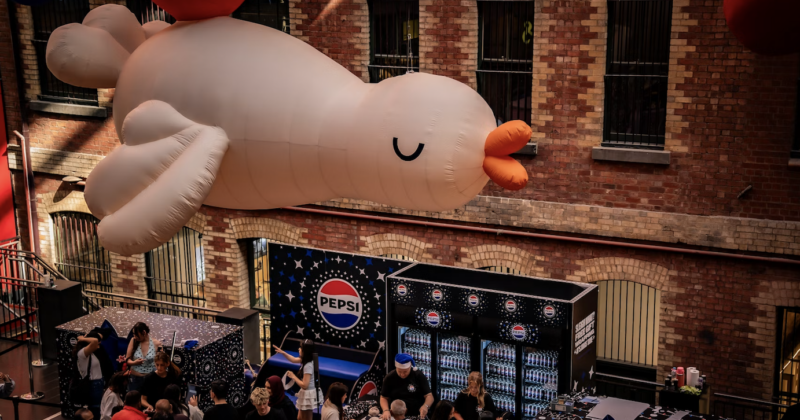
For decades, the surest way for a brand to win attention was to outspend the competition. Bigger media buys, bigger billboards, bigger celebrity check. That logic hasn’t disappeared entirely, but it’s losing ground fast — and the brands that are winning right now aren’t always the ones spending the most. They’re the ones that understand where culture is actually happening and know how to show up inside it credibly.
The shift shows up at live events, where a growing share of marketing budgets is now being funneled. A festival sponsorship, a pop-up, a talent tie-in — these used to be treated as add-ons to a broader media plan. Increasingly, they’re the plan – a well-executed brand activation. The reasoning is straightforward: audiences are fragmented across more platforms and personalities than ever, and a single ad buy no longer guarantees anyone’s attention. Being physically or culturally present where people already are has become more valuable than paying to interrupt them somewhere else.
What’s most interesting is how differently this plays out depending on execution. Two brands can spend roughly the same amount on an activation at the same type of event and get wildly different outcomes. One creates something people talk about after they leave. The other becomes background noise that blends into a hundred other logo placements. The difference rarely comes down to budget. It comes down to whether the brand understood the room it walked into.
This is part of why marketing teams have started getting a a lot more precise about the language they use to plan these moments. A sponsorship isn’t the same job as a sampling activation, and a sampling activation isn’t the same job as a talent-led one — even though all three might show up at the same festival on the same weekend. Treating these as interchangeable tools is one of the more common ways brands end up with an expensive activation that doesn’t actually move anything.
The talent side of this trend is particularly telling. Influencer and creator marketing has grown into an industry estimated well into the tens of billions of dollars annually, and a meaningful share of that spend now goes toward partnerships built around genuine cultural fit rather than raw follower count. A recognizable name can still buy attention. It can no longer reliably buy relevance. Audiences have become fluent enough in spotting a partnership that exists purely because a check was signed, and they tend to disengage from it just as quickly as they would from a traditional ad.
The brands pulling ahead tend to share a similar instinct: they start with the audience’s world, not their own product. They ask what a specific crowd — festival-goers, retail shoppers, a fandom, a local community — is already inclined to do, and then find the format and the partner that fits that behavior, rather than picking a format first and forcing an audience to care about it. It’s a more research-heavy, less glamorous way of working than simply writing the biggest check available, and it doesn’t always produce the flashiest campaign on paper. But it tends to produce the one people remember past the weekend it happened.
None of this means budget stops mattering. Scale still buys reach, production value, and access that smaller players can’t touch. What’s changed is that scale alone no longer buys relevance. The brands treating cultural fit as a strategic input — not an afterthought brought into a media plan — are the ones building the kind of attention that compounds, rather than the kind that evaporates the moment the event ends.
That distinction is becoming one of the more reliable predictors of which marketing campaigns actually work in a landscape where basically every brand has the budget to show up, but far fewer have figured out how to actually belong.