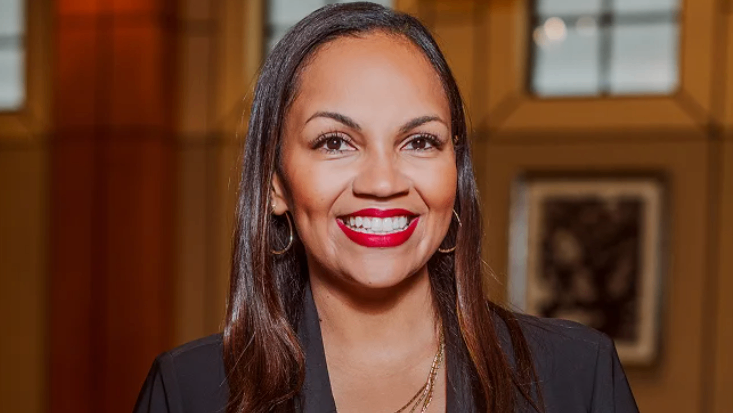
In an industry often defined by rigid data and traditional structures, Tiffany Whitlow is rewriting the rules. As the co-founder of Acclinate, a digital health and predictive technology company that focuses on increasing diversity in clinical trials in communities of color, Whitlow is on a mission to prove that health equity is not just a social imperative—it’s a business necessity. Driven by her own experiences as a young mother navigating a healthcare system that often felt inaccessible, she is leading a movement to ensure that clinical research finally reflects the diversity of the world it serves.
BlackDoctor spoke with Whitlow to discuss the personal story behind Acclinate and its flagship NOWINCLUDED, which, unlike traditional recruitment models that only reach out when a clinical trial is hiring, focuses on community-first engagement, the power of building with integrity, and why the future of medicine must be inclusive to be effective.
To start, could you share the origin story of Acclinate? You’ve mentioned that you don’t come from a traditional biotech background, but you certainly have lived experience. How has your personal history shaped the mission you are driving today?
Tiffany Whitlow: I was actually given up for adoption because I am biracial. My biological mom ended up keeping my four Caucasian siblings. When we look at the underlying problem here, drugs are being created that are not as effective as possible for the majority of the population. People from underrepresented communities have not truly been invited to the table. Women were only invited to participate in clinical research within our lifetime. We’ve come far, but not far enough.
I was a teen mom, and my son was diagnosed with asthma. He was given albuterol along with two other prescriptions. I had no idea that clinical trials existed or that they were how drugs were developed. I also didn’t know that albuterol is 47 percent less effective in African-Americans and 67% less effective in Puerto Ricans because we weren’t represented in those studies. A researcher from the albuterol team told us they tried to get representation but couldn’t, and there was no mandate requiring it. Acclinate was founded on the belief that we can do better to ensure the future of medicine is more effective. My co-founder also has a personal story: his mother was diagnosed with tuberculosis, and there were clinical studies happening right around the corner that she didn’t even know existed.
Sitting there as a young parent on Medicaid and WIC, I was just doing what the standard of care was. I didn’t know how to question it; this was 2007, and I wasn’t going to ask a chatbot if this was the best option for my son. I thought systematically: who was supposed to educate me? You don’t hear about clinical trials from your family, in the classroom, or from your pediatrician. You have to go seeking that information. Especially here in Alabama, when people hear clinical trials, they think of Tuskegee and the syphilis study. While we acknowledge that history, we have to recognize that we have Institutional Review Boards (IRBs) in place now to protect people. We can’t be afraid of being part of the future just because we are thinking about the past.
Can you talk more about that data gap you experienced, specifically regarding the effectiveness of albuterol?
It was eye-opening. It led me down the rabbit hole of asking, “Who was supposed to tell me? Would I have participated?” It made me realize that many things are designed without Black people or women in mind—even the seatbelts in our cars were designed with white men in mind. A lot of things were developed without us in the room.
You’ve mentioned that clinical trial recruitment is often a short-term initiative that disappears once the spots are filled. How is Acclinate building a presence focused on long-term, sustainable health benefits?
The best part of being an entrepreneur is building with yourself in mind. I build things I want to be a part of. From day one, we’ve been intentional about making community investments—supporting Little League teams, coaches, and our Divine Nine organizations and HBCUs. With the first check we ever won in a pitch competition, we gave scholarships to HBCU students. If you’re going to be intentional, you have to go where the people are. We activate through activation points—the people and places already doing the work—and we come alongside them to help enable their success.
It goes back to building with myself in mind. Don’t come and ask me for something when it’s time for you to do a study; think about me ahead of the ask. I want people to invest their time, energy, and care. We are here to educate people so that when opportunities arise, they are empowered to say yes or no. It’s about being authentic. My kids know that one thing I teach them is integrity: doing the right thing when no one is watching. That is fundamental to Acclinate.
You’ve spoken about the challenges of being a Black woman in a male-dominated field. What does that journey mean to you?
It is hard on a day-to-day basis. I want to leave a legacy of being selfless. Being a woman co-founder means I have to exemplify that every day. Sometimes your voice isn’t heard because women often communicate with empathy and emotion, and that doesn’t always translate as crisp in a hard-sale environment. I am a mom first, and I lead by example. My team knows that if my children call, I will stop what I’m doing to tend to them. I want to show women that you don’t have to put your family on the back burner to be successful. We get more out of our team when they are allowed to be complete people who invest in their health and families.
In order to ensure your drugs work for the masses and can be sold to more people, you have to have that representation. People in science are starting to understand that. You might call it diversity or greater representation, but whatever you call it, in order for a drug to be effective, you have to have diverse backgrounds, age groups, and populations represented. You have to make these intentional investments.
When you look a few years down the road, what does true health equity look like to you?
It means everyone has an equal opportunity to advance and better themselves. It means we are all able to prioritize our health with the understanding that it allows for a longer, better life. Whether you are a veteran, a stay-at-home mom, or someone in a rural or urban setting, you deserve an equal playing field. I want everyone to be able to attain their full health potential using the technology and advances we see in medtech today.
What is next for you and Acclinate? Where can our audience go to learn more?
We are growing and scaling. We have an obligation to bring resources to our communities so they can live healthier lives. We are also celebrating maternal health and emphasizing the importance of finding time for self-care—I share my gym journey on Instagram not to show off, but to encourage others to force that time into their lives. We have boots on the ground activations happening in cities like Chicago, Atlanta, Huntsville, and Philadelphia.
For those interested, you can check out Tiffany Whitlow’s podcast, NOWINCLUDED Unfiltered, on Apple Podcasts, Spotify, or YouTube. You can also join via the mobile app or at NowIncluded.com